BLACK BY GOD: Hope emerges for WV coalfields as judge orders partial reinstatement of cancelled $300M USDA grant
By Matthew Young | Black By God, Black By God Agriculture, Donate here.
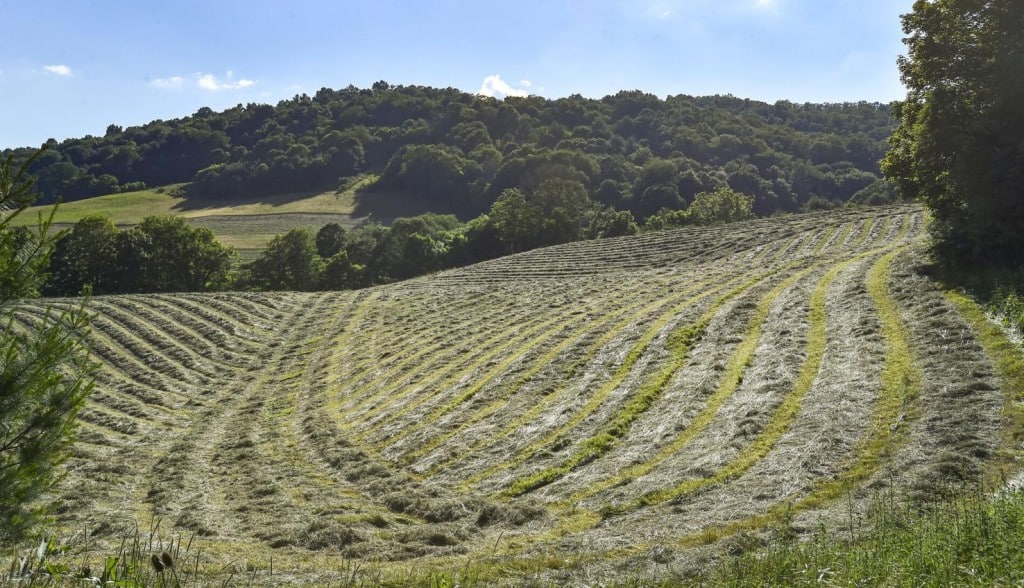
Farmers in West Virginia’s southern coalfields have new reason to be optimistic this week, after U.S. District Court Judge Beryl Howell ordered that nearly half of a recently terminated $300 million federal grant program be reinstated.
Earlier this year, the U.S. Department of Agriculture (USDA) unceremoniously canceled the “Increasing Land, Capital, and Market Access” grant program which had been established in 2021 as part of the American Rescue Plan Act (ARPA). Referred to as the “ILA” program, the grant was intended to improve access to land and resources for disadvantaged farmers in traditionally high-poverty areas. A total of $550 million was appropriated to the program by Congress, with the USDA, in June 2023, committing $300 million to fund 50 individual projects across the country for a period of five years.
In late March, 49 of those 50 projects received notice from USDA Farm Service Agency (FSA) Associate Administrator Steven Peterson that their funding would be terminated, because, as Peterson noted, the USDA “should never pick winners in the land market based on immutable characteristics like race or sex.”
“The USDA has determined that awards under this program involved discriminatory preferences based on Diversity, Equity, and Inclusion.”
“The USDA has determined that awards under this program involved discriminatory preferences based on Diversity, Equity, and Inclusion (DEI) and wasteful spending that did little to further lawful agricultural land purchases,” Peterson’s termination letter stated. “The vast majority of projects across the ILA program violated equal protection principles by selecting beneficiaries based on race, ethnicity, sexual orientation, or sex.”
The ILA program provided $8.5 million of the committed funds to a five-state cooperative between West Virginia, Virginia, Pennsylvania, Maryland, and North Carolina. Known as the “Working Lands of Central Appalachia” program, the multi-state collaboration was spearheaded by the West Virginia University Institute for Community and Rural Health. Among other objectives, the Working Lands of Central Appalachia project sought to increase the total land available for agricultural production, and the creation of West Virginia’s “Farm Link” program to raise awareness of USDA resources.
With the assistance of five research assistants, WVU’s Megan Govindan served as project lead for the cooperative, and was responsible for facilitating the division of the funds over the five-year period.
“As we’re building those pathways, we’ll also be engaging a number of West Virginia organizations that will help coordinate training activities to get the support we need for land, capital and market access,” Govindan stated in an April 2024 press release.
The division of the $8.5 million included $500,000 for the West Virginia Department of Agriculture, $200,000 for the West Virginia Military Authority Patriot Gardens, and another $200,000 for the West Virginia Farmers Market Association. The Economic Development Greater East program (EDGE), which has been instrumental in numerous land reclamation and economic revitalization initiatives throughout West Virginia’s southern coalfields, had anticipated the receipt of $1.1 million. Additional sub-award recipients were to include BBG The West Virginian, the Center for Dairy Excellence, the Virginia Cooperative Extension and VSU College of Agriculture, Farm to Institution New England, Food Systems Leadership Network, and Health Care Without Harm.
When the ILA program was terminated in March, and the Working Lands of Central Appalachia project was no longer funded, the aforementioned projects were left to fend for themselves, and Govindan and her team were left without jobs.
Read the Charleston Gazette-Mail’s report, “Coalfield farm programs struggle as USDA cut $8.5M in grant funding; cites DEI,” on wvgazettemail.com.
Shortly after the ILA’s termination, representatives of WVU released a statement confirming their intention to appeal the USDA’s decision.
“The continuation of this project is critical to improving the health and overall well-being of all West Virginians,” Govindan noted in the statement. “By integrating values-based procurement and ‘Food is Medicine’ initiatives, the program creates a resilient agricultural model that fosters both clinical wellness and regional financial stability.”
WVU’s appeal was swiftly filed with the National Appeals Division (NAD), and just as swiftly denied as the ILA’s termination “concerns matters of general applicability.”
“FSA’s decision is not based on the individual application of specific program criteria,” NAD Acting Director Jennifer Nicholson explained in her decision. “Instead, your grant termination is based on the general policy priorities of USDA and its decision to cancel the ILA program. The Secretary of Agriculture has determined that this program, and awards made thereunder, no longer support USDA priorities.”
However, as the ILA was far from the only grant program terminated by the USDA under the current administration, an initially unrelated lawsuit had been filed in the Washington D.C bureau of United States District Court nearly a year prior. That suit, filed by the North Carolina-based Urban Sustainability Directors Network, alleged similar illegal grant program terminations on the part of the President Donald Trump-controlled USDA.
“Policy, pattern and practice has undercut efforts to strengthen rural and agricultural communities.”
“This action seeks to stop the U.S. Department of Agriculture’s policy, pattern, and practice of unlawfully terminating hundreds of grants issued to nonprofit organizations, farmers, ranchers, universities, cities, and states,” the lawsuit argued. “Defendants’ policy, pattern and practice has undercut efforts to strengthen rural and agricultural communities, address food security in low-income communities, support beginning farmers, empower urban communities to address climate and heat risks, and support the production and marketing of climate-smart commodities. Defendants’ sole basis for these mass terminations is that the grant awards allegedly no longer effectuate new USDA priorities – namely the Trump Administration’s priority to attack anything it can portray as related to diversity, equity, inclusion or climate change, regardless of the purpose of the awards or limits on agency authority.”
Judge Howell allowed the lawsuit to be amended to include 24 organizations whose funding was cut through the termination of the ILA program, ultimately ruling, on June 30, that, “The terminations of their individual grants were likely contrary to statute, that they will suffer irreparable harm in the absence of relief, and that the balance of equities and public interest favor preliminary injunctive relief.”
“Thus, these grant terminations are preliminarily vacated, and defendants are enjoined from giving them any effect,” Howell added, before ordering the USDA to update the court regarding the status of the funding reinstatement by July 3.
The 24 organizations represent approximately $127 million of the $300 million previously committed by the USDA. And while WVU and the Working Lands of Central Appalachia project were not among those reinstated by Howell’s order, legal precedent for future reinstatement has now been firmly established by the U.S. District Court.
BBG will provide updates regarding this developing situation as additional details are made available.
Author

Related Articles

THE FRONT PORCH: Has Ad culture gone too far?
Ads are something most of us have grown accustomed to. They fill our social media feeds, streaming services charge us extra to remove them, and now, those same ads may be making their way into PC and console gaming.