Greenbrier County Commission holds first hearing on proposed hotel occupancy tax increase
On Tuesday, Sept. 2, the Greenbrier County Commission held its first public hearing pertaining to the proposed Hotel Occupancy Tax Ordinance.
By Dakota Baker, RealWV
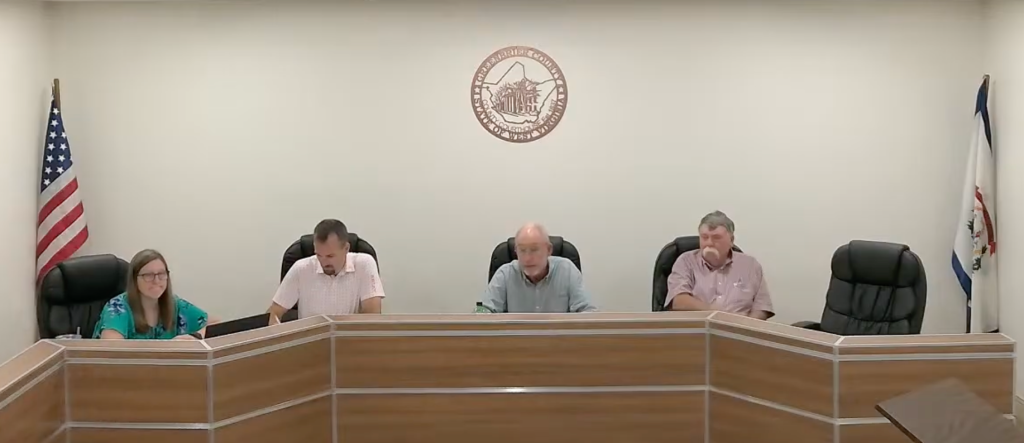
LEWISBURG, W.Va — On Tuesday, Sept. 2, the Greenbrier County Commission held its first public hearing pertaining to the proposed Hotel Occupancy Tax Ordinance. This ordinance would repeal and replace the existing one and increase the hotel occupancy tax from 3 percent to 6 percent.
Kara Dense was the only person who signed up for public comment during this first hearing.
Dense read the following statement:
“On behalf of the Experienced Greenbrier Valley Board of Directors, which, of course, is the Greenbrier County Convention and Visitors Bureau, I would like to respectfully ask the Greenbrier County Commission to consider delaying action on the proposed additional 3 percent hotel/motel occupancy tax. Given the recently announced ownership agreement involving The Greenbrier and the significant investment anticipated in the resort over the coming years, our board believes it would be prudent to allow time for this transition and investment to take place before implementing an additional tax. The Greenbrier is an important tourism partner and economic driver for our county, and we believe a short delay will provide an opportunity to understand how these changes may affect the resort, our tourism economy, and the future hotel/motel tax collection. We appreciate the commission’s thoughtful consideration of this request and its continued support of tourism and economic development in Greenbrier County.”
Commission President Lowell Rose discussed the proposal and stated that, aside from the additional 3 percent tax, the ordinance includes some cleanup that needs to be completed for coding purposes. He clarified that approval of the ordinance does not necessarily mean the 3 percent tax will or will not be included.
Commissioner Holliday noted several changes that would be worth highlighting. These include registration certificates; changes to registration information; administrative records and forms; monthly return forms and due dates; filing methods; recordkeeping and record retention requirements; granting the commission auditing authority; fines for late payments; establishing an appeals process; authorizing uses of funds collected; accounting standards; and the transition to 6 percent which the commission can vote to leave at 3 percent or change to 6 percent.
One of the most significant changes would be the addition of marketplace facilitator reporting, which is now required by law in West Virginia. This requirement applies to businesses and platforms such as Airbnb, Vrbo, travel agencies, and other similar businesses. Under the new reporting requirements, these marketplace facilitators are responsible for reporting information about the transactions they facilitate, helping ensure that the appropriate taxes are properly reported and collected.
An additional public hearing was originally scheduled to be held on Sept. 3, but was canceled due to weather and will be rescheduled at a later date.
Video from the first public hearing can be viewed here.