
SUNDAY SERMON: Like an unpredictable apple tree
By Rev. Stephen Baldwin
OT: Exodus 20.1-4, 7-9, 12-20
NT: Matthew 21.33-46
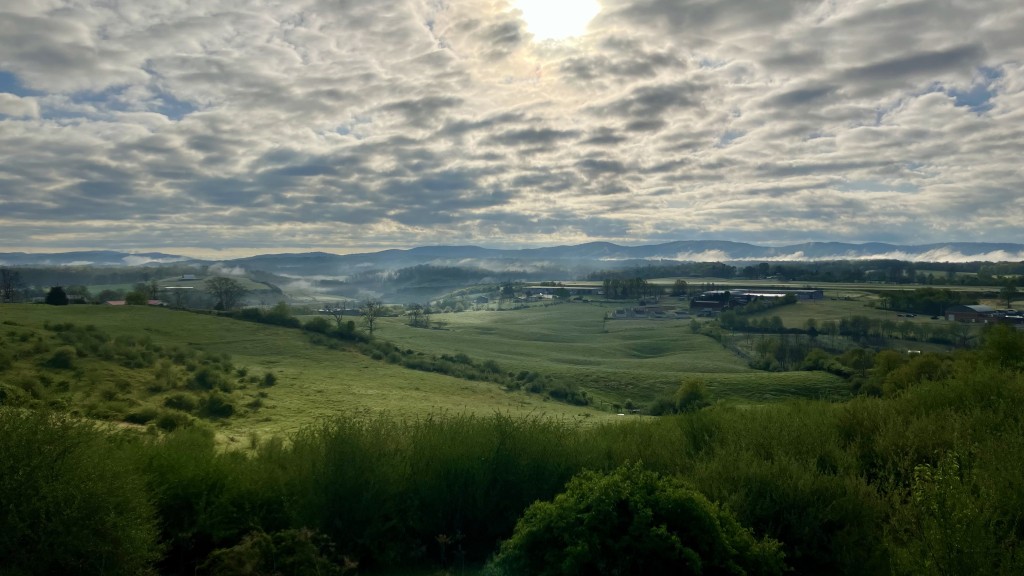
About ten years ago, Kerry and I purchased some land in Gap Mills. The property has a cabin and a small pond on Peter’s Mountain. It does not have internet or cell phone service, which is usually a benefit. It also has about a dozen apple trees, which has been good for us as well as for the bear and deer who live on the mountain.
Most of the apple trees are predictable. Unless there was a late spring frost, they produce the same apples in similar amounts at the same time every year. Except this one tree.
This one apple tree is…unpredictable. Sometimes it produces apples, sometimes it doesn’t. Sometimes it has green leaves in the summer, sometimes it’s bare. Sometimes that tree never produces a single thing all year and we just know it’s got to finally be dead…before it comes roaring back to life. The fruit of that tree is unpredictable. And that’s why I love that apple tree more than the rest. Because it’s like you and me.
Some seasons we produce a ton of fruit. We work hard, we put in more time with God, we volunteer, we do more prayer and study at home, we help our neighbors, we take care of our parents or our grandkids, sometimes both! Some seasons we don’t produce any fruit. We need time away for ourselves, for our family. Some we produce a little. We do a few random acts of kindness. We talk to God every now and then. And we usually produce enough fruit to keep things going.
That’s what this week’s parable is ultimately about–producing fruit. It’s a metaphor that runs throughout John’s gospel. Not apples and oranges, but actions and values. Throughout the Gospel of Matthew, Jesus says our fruits are the evidence of our faith.
Now, don’t get it twisted. As Frederick Buechner once wrote, “If good works are not the cause of salvation, they are nonetheless the mark and effect of it. If the forgiven man does not become forgiving, the loved man loving, then he is only deceiving himself.”
We are not saved by the things we do; that we were saved by Jesus on the cross 2,000 years ago changes the things we do, or at least it should. The things we do are the mark and effect of salvation. “You shall know them by their fruits,” Jesus said in Matthew 7:15.
For the last two weeks, we’ve read parables about vineyards. Do you remember who tells the parables? Jesus. Who is he speaking to? The religious authorities, Pharisees and Sadducees. What does he teach? To produce fruit.
Today’s parable is rather violent and disturbing. In the parable of the wicked tenants, Jesus is the son sent to protect the vineyard, but the wicked tenants kill him. It’s a cautionary tale, meant to make those religious leaders of Jesus’ day stop and think. Meant to make us stop and think today.
Our job isn’t to own the vineyard. Our job isn’t to run it. Our job isn’t to monetize it. Our job isn’t to take power over it. Our job is to produce fruit.
That message matters on World Communion Sunday and on Scottish Communion Sunday. Because the secret to our future lies in our past. We follow the commandments. We worship. We celebrate the Lord’s Supper. We read the scriptures. We sing the songs. We pray with one another and for the entire vineyard. WE. PRODUCE. FRUIT. All these are small and important means of producing fruit.
We all know that we have our ups and down, times like that apple tree in Gap Mills that we produce more and times that we produce less. The trick is to find your rhythm so you can keep producing the fruit you’re capable of.
A great example of this is Roger Federer, one of the greatest men’s tennis players to ever lace up his tennis shoes. He was asked by a fellow athlete in 2017 what the secret to his success was. Did he outwork everyone? Out-train his competitors?
Federer smiled and then shared his daily schedule. He said that every day he makes breakfast for his kids, takes them to school, trains for tennis for two hours, has lunch with his wife, picks up his kids, they cook dinner together as a family, catch up on each other’s day, and then he goes to bed thinking, “Man, that was a great day.” And he did that for twenty years, as a world-class athlete at the pinnacle of his sport. Not because he had the best equipment or trained the hardest or played the most tennis. He found his rhythm for producing fruit.
Like a fruit tree, we as individuals and we in the church at large are in it for the long haul. The best way to produce fruit over time is to find a peaceful rhythm where we are able to produce fruit.
It’s no small thing to take communion together with millions of other Christians across the world. It’s one tangible way we can produce fruit together. It’s practices like this–remembering our history, receiving God’s forgiveness, finding nourishment for the week ahead–that make a pattern in our lives which sustain the faith of us as individuals and the life of the larger church.
I pray you are energized and satisfied by the Lord’s Supper you receive today. I pray you are proud of your Scottish heritage, where God speaks through the land and we do things decently and in order. I pray you are filled with the Holy Spirit as communion connects you to brothers and sisters who we produce fruit alongside as God’s children. Will you join me in prayer now?
Gracious God, thank you for this wonderful day when we take time to look around as part of the wider and deeper church. It is miraculous that thousands of years after Jesus taught those first disciples to remember him at table that we are still doing it today. And we are doing it together. Producing fruit as best we can in order to serve you. I pray that you would accompany each person here today wherever they are are in their journey alongside you. Some are in their prime growing season. Some are winding up. Some are winding down. Some aren’t sure where they are. May they all know they are with you. May we all find our purpose in serving you. We stand on the shoulders of so many generations who came before us, and we pray that many generations after us will also continue producing fruit as Jesus taught us. We pray this in your holy name, Amen.
Related Articles

From West Virginia to Chicago: Black By God joins national conversation on independent media
I went to Chicago representing a newsroom rooted in West Virginia, but the conversations happening there were much bigger than any one state
THIS WEEK IN WV HISTORY: Oct. 4–10
The following events happened on these dates in West Virginia history.

Real West Virginian of the Week: Michael ‘Goose’ Sizemore — Turning Appalachian craft into a life of art
Long before Michael “Goose” Sizemore was creating massive metal sculptures for corporate clients, his education as an artist was already underway in the mountains of West Virginia.