
Real West Virginian of the Week: LaDawna Walker Dean works to build a healthier West Virginia
By Hannah Yost, RealWV
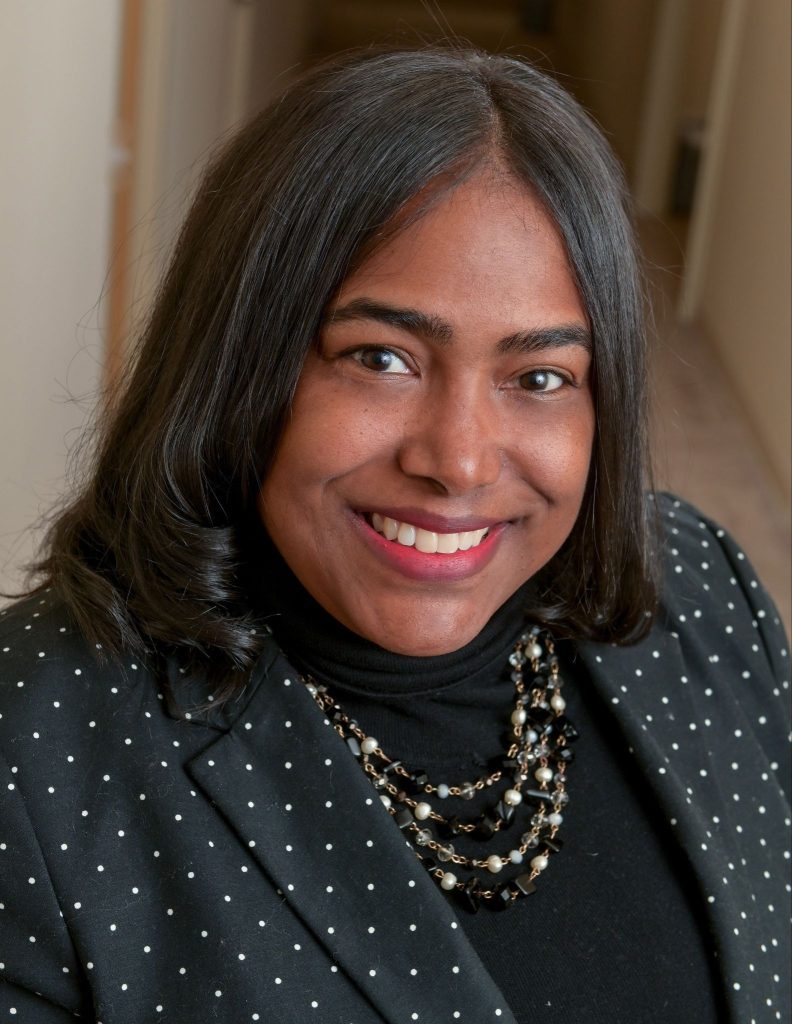
HUNTINGTON, W.Va. — Long before LaDawna Walker Dean began leading statewide health initiatives, she learned that service could change the direction of a person’s life.
A lifelong West Virginian, Dean has dedicated her career to helping individuals, families, and communities across the state. She earned her Bachelor of Social Work from Marshall University and her Master of Social Work from West Virginia University. Today, she serves as director of the West Virginia Minority Health Initiative at the Minority Health Institute within Marshall University’s Department of Public Health.
Through that work, Dean combines her background in social work, behavioral health, and public health to address health disparities and improve access to care.
“This state isn’t just where I work; it’s home, and it’s where my heart is,” Dean said.
Dean’s path into social work began in 1999 at Marshall University, with a conversation she still remembers.
She recalled seeing Professor Phil Carter, a Marshall University social work professor, recruiting students into the program. Carter’s passion for social work and his belief in the impact social workers can have on individuals, families, and communities resonated with her.
“I decided to enroll in the program, and the rest, as they say, is history,” Dean said.
As she continued through the program, Dean said she was shaped by professors and mentors who were deeply committed to serving others. Their dedication, compassion, advocacy, and leadership helped guide her own career.
“They didn’t just teach me social work — they modeled compassion, advocacy, leadership, and the importance of making a meaningful difference in the lives of others,” Dean said.
Over time, Dean began to see that many of the challenges people face are not isolated to individual circumstances. They are often connected to larger issues, including access to health care, education, transportation, behavioral health support, and community resources.
That understanding eventually led her into public health, where she could focus not only on helping individuals, but also on creating systems and programs that improve the health and well-being of entire communities.
Another major influence in her professional journey has been Dr. Anthony T. Woart, chair and professor of the Master of Public Health Program at Marshall University and founder and director of the Minority Health Institute. Dean said his mentorship has challenged her to think beyond traditional approaches, develop innovative programs, pursue meaningful research, and build partnerships across the state.
Dean said she is grateful for the people who invested in her before she fully saw her own potential.
“Today, I strive to pay that same investment forward by mentoring others and creating opportunities that help individuals and communities thrive,” she said.
For Dean, service is rooted in both faith and family. She said her faith has always been the foundation of her life and the driving force behind her commitment to helping others.
Her parents taught her compassion, integrity, hard work, and service from an early age. Her husband has been her greatest encourager and prayer partner, reminding her to trust God’s plan and persevere through challenging seasons. Her children inspire her to lead by example and work toward a healthier future for the next generation.
Professionally, Dean said every family she has served has shaped the person she is today.
Whether supporting children with autism, helping individuals navigate behavioral health challenges, or working to reduce health disparities across West Virginia, those experiences have strengthened her belief that every person deserves dignity, compassion, and the opportunity to thrive.
“Together, my faith, my family, and the people I’ve been honored to serve continue to inspire my passion for making a meaningful difference in the lives of others,” Dean said.
After more than 20 years in social work and behavioral health care, Dean said one thing has kept her motivated: people.
“Seeing lives transformed is the greatest motivation,” Dean said. “Whether it’s a student graduating, a family finally receiving services, someone entering recovery, or a young person choosing a different path than the justice system, those moments remind me that even small efforts can create lifelong change.”
In her current role with the West Virginia Minority Health Initiative, no two days look exactly the same. Dean oversees statewide health initiatives, manages grants, builds partnerships, coordinates educational programs, organizes conferences and health fairs, develops outreach strategies, and works closely with community organizations, health care providers, faith-based organizations, and government agencies.
Much of her work focuses on improving access to health care, behavioral health resources, preventive services, education, and support.
The mission of the West Virginia Minority Health Initiative is to reduce health disparities and improve health outcomes for underserved populations throughout the state through education, access, partnerships, and community engagement.
Dean said she is especially proud of the annual West Virginia Minority Health Fair, Community Health Worker training program, behavioral health and early diversion workshops for youth and young adults, and the statewide provider conference.
Those initiatives bring together health care professionals, educators, faith leaders, community organizations, and families to work toward lasting solutions.
Access, Dean said, remains one of the greatest challenges facing underserved communities in West Virginia. That includes access to health care, behavioral health services, transportation, healthy foods, preventive care, and reliable health information.
West Virginia also continues to face high rates of chronic disease, substance use disorders, mental health challenges, and health care workforce shortages.
“Addressing these issues requires collaboration, education, and meeting people where they are,” Dean said.
One area of Dean’s work focuses on providing resources for youth and young adults before they enter the justice system. She said early intervention can change the direction of a young person’s life.
When behavioral health concerns, trauma, or substance use are identified early, and young people are connected with positive supports, communities can help reduce the likelihood of justice system involvement.
“Young people need trusted adults who see their potential and provide opportunities before problems escalate,” Dean said.
That kind of work requires partnership. Dean said collaboration is essential to creating lasting change because no single organization can solve the state’s biggest health challenges alone.
“Real change happens when people bring their unique expertise together around a shared mission,” Dean said. “Partnerships allow us to maximize resources, avoid duplication, and create solutions that truly meet community needs.”
Throughout her career, Dean has experienced moments that reaffirm why the work matters.
One that has stayed with her came during a conference attended by two parents whose adult child had struggled with substance use and had cycled in and out of jail and prison for more than 25 years. During one session, the mother tearfully shared that she had spent decades believing she was the reason her child experienced addiction and incarceration.
Another attendee, a person in long-term recovery, stood and asked to speak. She explained that addiction is a complex disease and not the result of a mother’s love or lack thereof.
“She looked directly at that mother and said, ‘You are not the reason. Please stop blaming yourself,’” Dean said.
In that moment, Dean said, the mother broke down in tears. For the first time in more than two decades, someone had helped her release the guilt she had been carrying.
To Dean, that moment showed that the conference was not just about programming or data.
“We weren’t just hosting a conference; we were changing perspectives, breaking stigma, creating healing, and helping people realize they are not alone,” Dean said.
Moments like that remind her that some of the most meaningful outcomes are not always measured in reports or numbers. Sometimes, they are found in the healing that happens when people share their stories and find hope in one another.
“That is why I continue to do this work every day,” Dean said. “It is about creating spaces where healing begins, lives are transformed, and hope is restored.”
Public health work can be emotionally demanding, but Dean said her faith keeps her grounded.
“Prayer reminds me that I don’t carry every burden alone,” Dean said.
She also stays encouraged by celebrating progress, even when it is incremental. Each partnership formed, life touched, and barrier removed reminds her that meaningful change takes time, but is worth pursuing.
Dean believes one of West Virginia’s greatest strengths is the way people care for one another.
“When someone is hurting, communities often rally together without being asked,” Dean said. “That spirit of compassion, resilience, and generosity is one of our state’s greatest strengths, and it’s something I’ve witnessed throughout my career.”
She also wants people to understand that West Virginia is not defined only by its challenges.
While the state has obstacles to overcome, Dean said that is only part of the story. She sees West Virginia as a place filled with intelligent, innovative, compassionate, and resilient people, including professionals, educators, health care providers, entrepreneurs, researchers, first responders, business owners, faith leaders, and community advocates who work every day to make a difference.
“We don’t give up on our communities; we invest in them,” Dean said.
Outside of work, Dean finds joy in spending time with her husband and children. She also enjoys serving in her church, mentoring young people, traveling, and supporting community events.
Those moments, she said, help keep her grounded and remind her why she does the work.
To young West Virginians who feel they may need to leave the state to build a successful career, Dean offers encouragement.
“Never underestimate the impact you can make right here at home,” Dean said. “West Virginia needs talented, compassionate leaders who are willing to invest in their communities.”
She said success is not measured only by where a person lives, but by the lives they touch. Her advice is to build relationships, keep learning, seek mentors, and create opportunities where they do not yet exist.
“You can build a meaningful career while making a lasting difference in West Virginia,” Dean said.
When people read her story, Dean hopes they see that one person can make a difference through purpose, compassion, and perseverance.
Her journey, she said, has never been about recognition. It has been about creating opportunities, improving lives, and leaving communities stronger than she found them.
“If my story encourages even one person to serve others, pursue their calling, or believe that positive change is possible, then I’ve accomplished something meaningful,” Dean said.
Ultimately, Dean hopes readers come away with hope — hope that through partnership, compassion, and a commitment to serving one another, West Virginians can build a healthier, stronger state for future generations.
Have a nominating for a future week? Email us at news@therealwv.com.
Related Articles
THIS WEEK IN WV HISTORY: Sept. 27–Oct. 3
The following events happened on these dates in West Virginia history.

At the West Virginia Film Festival, Appalachian youth have a vision for the state’s arts scene
This story is part of RealWV’s year-long focus on youth and belonging in West Virginia, exploring the difficult decisions young people face when deciding whether to stay or leave.
Reigning Warriors uses horses to support veterans, first responders in Sinks Grove
Michelle Miller has loved horses as long as she can remember.