
Under new guidelines, WV has until September to submit final request for federal broadband funding
By Autumn Shelton, RealWV
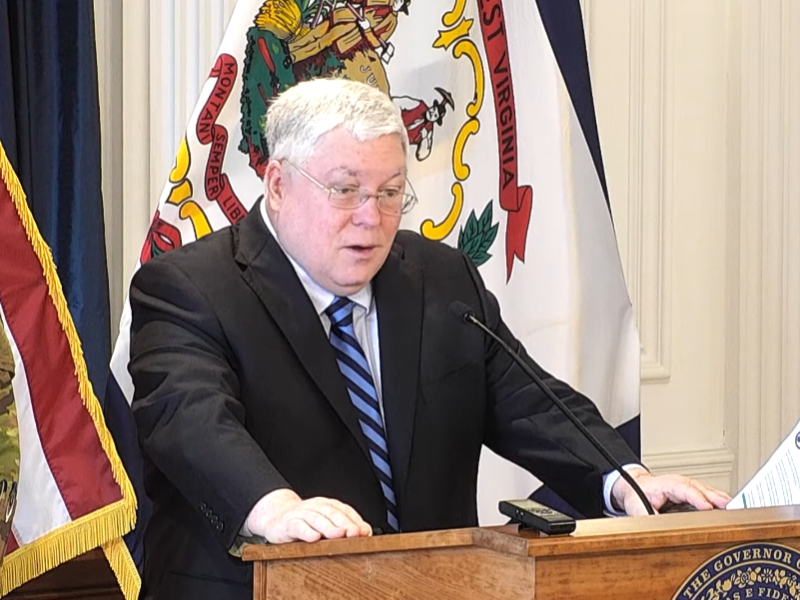
CHARLESTON, W.Va. – Gov. Patrick Morrisey has released information on the next steps required for the state to submit a final Broadband Equity, Access and Deployment (BEAD) proposal to the National Telecommunications and Information Administration.
According to information in a June 13 press release from the Governor’s office, the state has until September 3, 2025, to submit their final proposal. In that time, the state must meet new guidelines for BEAD funding following a restructuring of the program by the Trump administration.
“We have been anticipating the new guidelines from the Trump administration and are ready to move quickly to secure BEAD funding,” said Governor Morrisey. “These funds are critical to West Virginia and our efforts to provide fast, reliable broadband access across the state.”
BEAD was established through the Infrastructure Investment and Jobs Act (IIJA) of 2021. This Act was signed into law by former President Joe Biden and $42.45 billion in federal funding was allocated by Congress to build broadband infrastructure, ensuring that all Americans have access to high-speed internet.
In May 2022, a Notice of Funding Opportunity (NOFO) was released, detailing guidelines for BEAD participation, and eligible entities began work on proposals to secure their portion of federal funding.
However, in March 2025, the BEAD program was paused by U.S. Secretary of Commerce Howard Lutnick who stated, “because of the prior Administration’s woke mandates, favoritism towards certain technologies, and burdensome regulations, the program has not connected a single person to the internet and is in dire need of a readjustment.”
Three months later, on June 6, the review of the BEAD program was completed and new guidance was issued, prompting Morrisey to release the following statement on social media:
“Today, the federal government released its new guidelines on broadband expansion. We resisted pressure to rush a BEAD application through a process weighed down by overly-rigid mandates. That prudence has paid off.
We know that the terrain and realities of West Virginia demand flexibility—not a one-size-fits-all directive from Biden-era Washington. I want to thank Commerce Secretary Lutnick for his attention to both the taxpayer and the need for action relative to the BEAD legislation.
Broadband access is not a luxury. It is a necessity—and we are determined to deliver it. Today’s announcement is great for West Virginia. We will continue to move quickly to get our residents connected in all corners of the state.”
Morrisey’s June 13 press release states that the notice “has revised several elements of the BEAD Program, including:
- Reduction in subgrantee requirements
- A technology-neutral approach for meeting program service standards
- Additional “Benefit of the Bargain Round” prioritizing low-cost projects.
“Compliance with this Notice requires an accelerated schedule, and West Virginia will meet this challenge to ensure cost-efficient statewide broadband investments,” the press release continues. “In compliance with the terms of NTIA’s Policy Notice, the West Virginia Department of Economic Development, Office of Broadband (WVDED) is currently revising program procedures and application materials, as well as the current list of Target Locations eligible for BEAD funding. West Virginia anticipates opening its Benefit of the Bargain Round of applications in July, followed by a Final Proposal and a two-week public comment period in August.”
West Virginia has also sent notices to internet service providers to collect additional information required by the policy notice.
The press release states:
Two notices were released to internet service providers today to create opportunities to bring new participants into the BEAD applicant pool, and to supply West Virginia with information that could change the list of Target Locations or how Target Locations are offered for bidding in the upcoming Benefit of the Bargain Round.
The first notice is a non-binding BEAD Intent to Participate, open to any Service Provider Applicant who did not apply in prior WV BEAD applications or extensions. To view this notice, and for more information click here. Those companies who respond will be provided with forthcoming information regarding how to apply during the Benefit of the Bargain Round.
The second notice applies to Unlicensed Fixed Wireless Providers (ULFW) and is available here. The ULFW Evidence Request is a separate Notice of Intent for ULFW providers to indicate their intent to provide the West Virginia Office of Broadband with evidence that their networks meet BEAD technical performance standards.
According to the BEAD Restructuring Policy Notice, the following changes in proposals, among others, must be made to secure funding:
- The elimination of regulatory burdens, including eliminating the non-statutory requirements related to labor, employment, and workforce development. This includes the elimination of central planning and diversity, equity, and inclusion (DEI) edicts, the elimination of requirements related to climate change, the elimination of non-statutory requirements related to open access and net neutrality, the elimination of non-statutory requirements related to local coordination and stakeholder engagement, including obligations to consult with representatives of various demographic and identity-based interest groups, the elimination of requirements that favored non-traditional broadband providers (such as municipalities or political subdivisions), the elimination of the requirement for eligible entities to develop, implement, and provide updates on a middle-class affordability plan, and the elimination of the requirement related to the BEAD low-cost broadband service option.
- Ensuring technology neutrality – Instead of prioritizing end-to-end fiber, all technologies, including terrestrial wireless and low-orbit satellite must receive equal priority in order “to guarantee that American taxpayers obtain the greatest return on their broadband investment – the Benefit of the Bargain.”
- Optimizing BEAD locations.
The complete guidelines may be viewed in the policy notice:
https://www.ntia.gov/sites/default/files/2025-06/bead-restructuring-policy-notice.pdf
For additional information, visit broadband.wv.gov.