Lane says WV PSC is ‘committed’ to keeping coal-fired plants running
By Autumn Shelton, RealWV
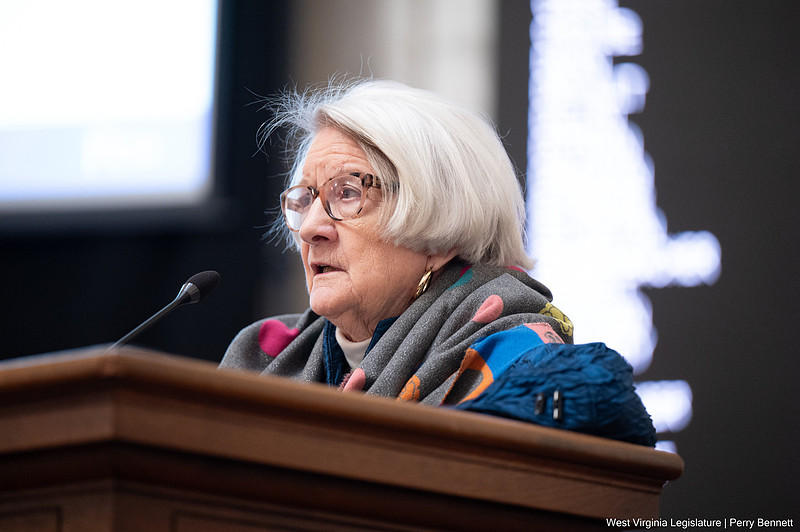
CHARLESTON, W.Va. – West Virginia Public Service Commission (PSC) Chairwoman Charlotte Lane made it clear on Monday that the PSC has no intention to issue any order that would cause the state’s coal-fired generation plants to shudder.
During the interim meeting of the Joint Committee on Energy and Public Works, Lane discussed coal provisions included in House Bill 2014 – the microgrid bill passed by the legislature in 2025 and signed into law by Governor Patrick Morrisey, as well as concerns surrounding the need for more energy generation.
According to Lane, the PSC has a responsibility to ensure that the state has “adequate utilities at the best possible price.”
“Now, sometimes that is very difficult, especially in these times when prices are rising,” Lane said. “As all of you have heard, I’m sure, from all of your constituents, most of the major utilities in this state have come in for rate cases, but rest assured that we look at those cases very closely and do the best we can to try to balance the interests of reliable service and reasonable prices.”
Lane added that the nation is facing a “reliability problem” when it comes to energy generation.
“This legislature, having recognized that last year in the microgrid bill, added provisions relating to our coal-fired units in West Virginia,” Lane explained. “89% of our generation in West Virginia comes from coal.”
As a result, Lane said that the life of the state’s coal-fired plants, currently set to be in operation until 2040, needs to be extended as long as possible. This need to keep the coal-fired plants open resulted in the microgrid bill’s coal provisions.
According to Lane, those provisions include the submission of an Integrated Resource Plan provided by the state’s major electric utilities that discusses their future goals, how they will generate energy beyond 2040, ideas on extending the life of the plants, ideas on making those plants more efficient, and how they may be able to reach a 69% capacity factor – although that is not required.
PSC hearings on the Integrated Resource Plans are scheduled to take place in May, Lane said, adding that another provision includes allowing utilities to enter into index coal contracts with the PJM market.
Additionally, Lane mentioned the recent FirstEnergy proposal to build a 1,200 megawatt natural gas generation plant, and said that the PSC will look into that proposal when it is submitted, and determine its cost-effectiveness, before making a decision.
Yet, Lane said that even with this new natural gas energy generation, the coal-fired plants will still need to be operational.
“The Public Service Commission is dedicated to keeping the coal-fired plants running,” Lane said. “And this legislature, several years ago, said that the coal-fired plants cannot be shut down without the approval of the Public Service Commission, and I can tell you that we are not going to give that approval.”
Lane said the effect of keeping those plants open is good for not only energy reliability, but also the state’s economy.
“We would be very foolish to let those plants idle,” Lane stated.
Following Lane’s statement, Delegate Evan Hansen, D-Monongalia, questioned Lane on the decision to keep the coal-fired plants open.
“What if the documentation in that case showed that it would save West Virginia rate payers money?” Hansen asked.
Lane responded that the PSC evaluates the facts in each case, but that the effects of closing those plants would “not be in the best interests of West Virginia.”
“So, you’ve already decided in a case that hasn’t even been filed how you would vote?” Hansen questioned.
“I think that I’ve been very clear when all of these issues have come up that I think our coal-fired plants are valuable to West Virginia, and that we should keep them open and running,” Lane responded. “And all you have to do is look across the country and see the panic in some states where they do not have enough generation. And, you can’t rely on renewables because it’s not baseload. And, you can’t rely upon solar because the sun doesn’t always shine and windmills – the wind doesn’t run. So, we have to rely upon baseload and that means coal and, hopefully, we’re going to have natural gas generation built in this state.”
Lane clarified that no one has filed to close the coal-fired generation plants.
Hansen then discussed a time when utility companies entered into contracts, due to a coal shortage, and had to pay around $200 for a ton of coal.
Lane responded that, at one point, due to the closing of coal mines and other factors, that utilities “may have paid” higher market prices for coal. However, she said she was unaware of which coal companies entered into those contracts with utilities.
“Would it surprise you to hear that companies owned by the family of our former governor, at the time when he was governor, entered into those contracts?” Hansen asked.
“As I said, I do not know,” Lane stated.
In response to additional questioning from Del. Daniel Linville, R-Cabell, Lane said that between 2021-2023 the Appalachian Power coal plants did not have enough coal to be operational, and they had to purchase energy from the PJM market.
“And, had they had the coal, they would have been making money for the ratepayers,” Lane said. “And, as a result, because all fuel purchases are supposed to be prudent and reasonable, we disallowed a recovery of, I think, $237 million.”
“Let me just say that purchasing fuel is an art and what looks good today, and you enter into the contract, might not be good a year from now,” Lane said. “But, you have to look at the facts at the time that you entered into the contract, and whether that was a reasonable decision. And, then, you go on from there.”
Lane said that the PSC looks into those costs and takes them into consideration.
When asked by Linville whether or not the war in Ukraine had any effect on the rise in coal prices, Lane responded he was probably correct, but noted that the shutdown of coal mines lessened the supply.
“Well, I just think, maybe, it’s better to blame Putin on that one than our former governor,” Linville stated.
Lane concluded that “there is no reason why” the coal-fired plants, with sufficient upgrades, cannot function “to 2050 or beyond.”