
‘Many of them will die’ – Doctor warns labor & delivery closures will have consequences for mothers who can’t make it to a hospital
By Stephen Baldwin, RealWV
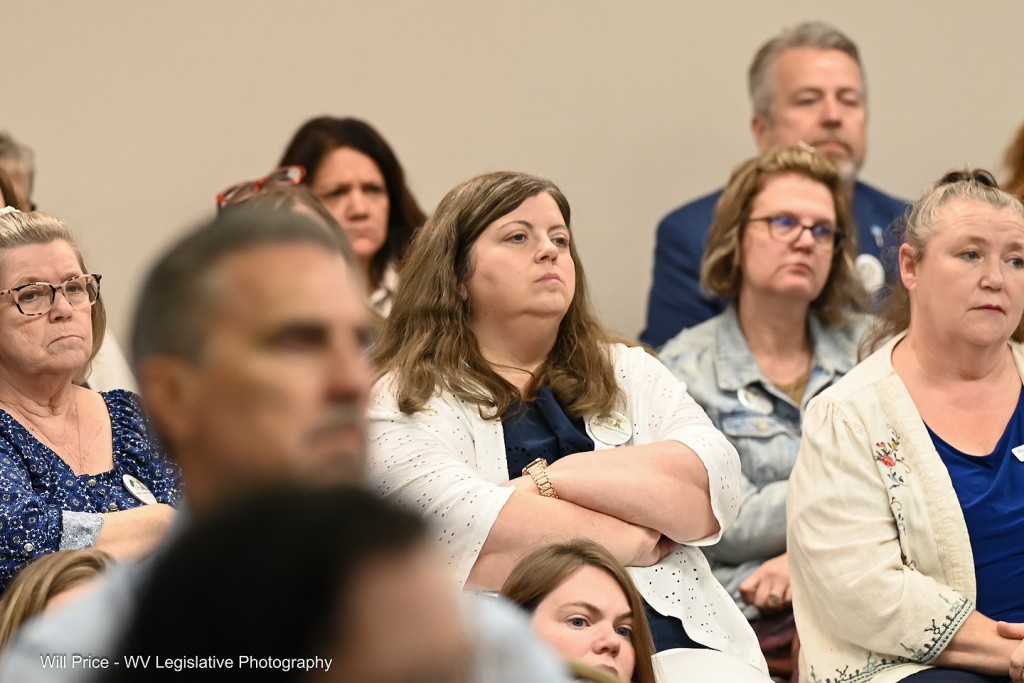
CANAAN VALLEY, W.Va. – Over the last decade, West Virginia has lost eight labor and delivery units. That’s on top of the nine units the state lost in the decade prior.
Del. Matthew Rohrbach, R-Cabell, who is a family physician, drilled down on that subject at a legislative interim meeting last week of the Joint Standing Committee on Health. Rohrbach asked officials from Vandalia Health how many labor and delivery units they currently operate out of their hospitals?
Jeff Goode, executive vice president for Vandalia, said that they operate three labor and delivery units out of 17 hospitals statewide.
“We’re trying to preserve and strengthen health care in West Virginia,” Goode explained in his introductory remarks. “We’re committed to building a West Virginia-rooted health care system with the goal of keeping care as close to home as possible.”
Vandalia closed two labor and delivery units this spring, at Greenbrier Valley Medical Center (GVMC) and Stonewall Jackson Memorial Hospital.
“Greenbrier County has seen a population decline in the last five years,” Goode said of the decision to close the unit at GVMC. “Despite some, I guess, kind of views from above, Greenbrier County has an older population.”
Goode went on to say that population decline and a lower number of deliveries at the hospital were not “triggering factors” in closing the unit, though.
“If we’re able to have doctors, nurses, and safe outcomes, those are the biggest reasons,” he said.
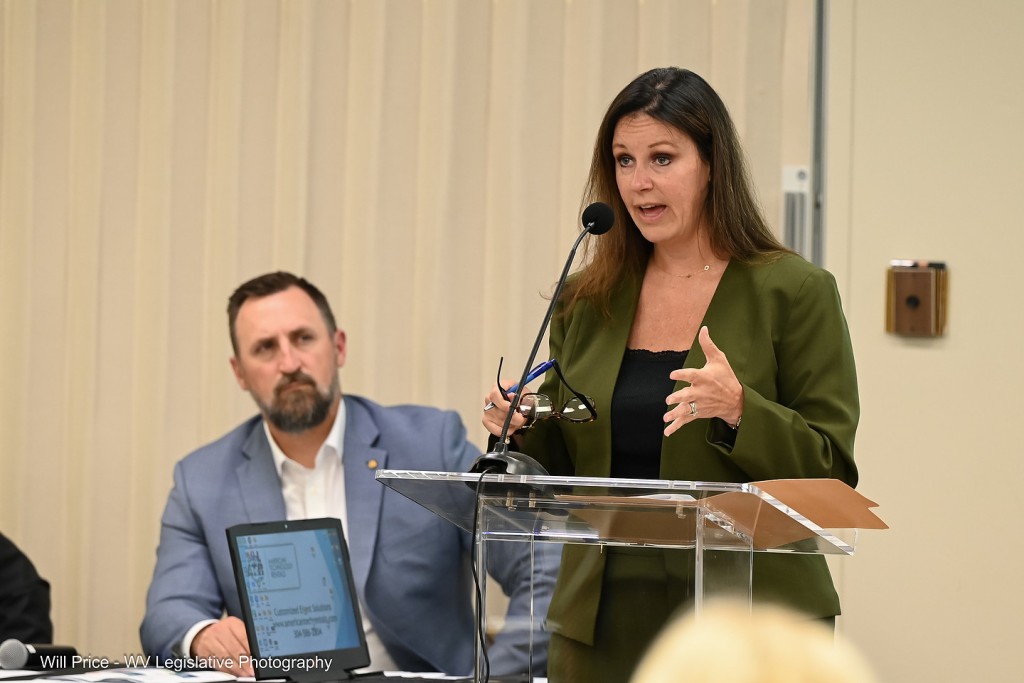
Becky Harless, chief administrative officer at GVMC, spoke next. She began her remarks by returning to local population demographics.
“When you look at ages 20 to 34, childbearing ages, there’s a population drop of 4.9% (in Greenbrier County). Even more alarming, in 15- to -19-year-olds, an almost 11% drop in population.”
She added that the hospital experienced a 43% decline in the number of deliveries from 2015 to 2025.
But in the end, Harless said, it was a staffing issue that led to the closure of the labor and delivery unit.
“We had ads out across the nation for OB-GYNs. We had 1,800 views on PracticeLink and 1,044 candidates. All of that got us 10 interviews. We made nine offers.”
None of the candidates accepted the job.
“We upped it,” she said, referring to the compensation package, but still, no one accepted the job.
‘When a unit closes, women don’t stop giving birth’
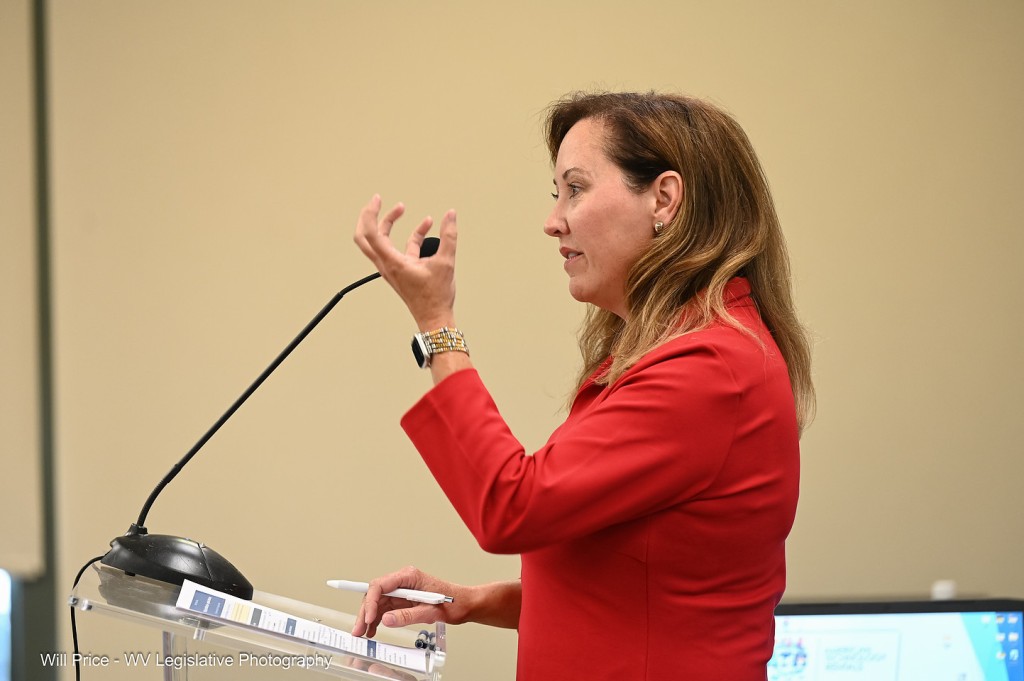
Dr. Dara Aliff, a private-practice OBGYN who works in the greater Charleston area, testified that what Vandalia is experiencing is part of a larger trend.
“The OB work shortage is national,” she said. “There’s nothing GVMC could have done differently.”
Aliff shared a litany of statistics to prove her point, including that 41% of rural hospitals have a labor and delivery unit, 116 birthing units have closed nationally since 2025, and more than two-thirds of rural hospitals have no obstetrics care.
“Southern and eastern West Virginia are experiencing the brunt of that, with many women traveling more than an hour to give birth,” said the Boone County native, who has practiced medicine in her home state for several decades now.
She didn’t mince words about the impact of that reality.
“When a unit closes, women don’t stop giving birth. They have them in ERs, at home, on the side of the road, and many of them will die. Many also travel out of state.”
Aliff told lawmakers that birth rates are declining rapidly in West Virginia.
“We’re not attracting people of child-bearing age,” she said.
“The declining birth rate is an economic statistic,” she argued. “It tells us whether people feel safe coming here to start a family.”
Can lawmakers help turn the tide?
Aliff repeatedly said that despite the state’s rural health care crisis, particularly for moms and babies, she is hopeful about the future.
“This is our opportunity,” she said, referring to a tranche of federal funds — $17 million over the next ten years — received by the state for maternal health care. “We have the funds…now we need to act. We need leadership and action. The women in McDowell and Pocahontas counties are watching.”
Aliff made the case that a combination of incentives for doctors, mobile prenatal care, telehealth, rural access partnerships, and more could be funded to transform health care for moms and babies across the state.
“This is the single most valuable thing you can accomplish in state government in your time here,” she told delegates and senators.
Certificate of Need?
Sen. Mike Woelfel, D-Cabell, asked Vandalia officials whether a modification of the state’s Certificate of Need laws would help the situation?
“I don’t see it as an issue recruiting OB-GYNs,” Jeff Goode of Vandalia answered.
“If someone wanted to come open their own business, aren’t they prevented?” Woelfel pressed, in regard to new labor and delivery options.
Aliff said it’s more complicated than that.
“A lot of the workforce now is women. They’re willing to work, but they can’t outsource maternity leave. Where we’re missing the mark is thinking outside the box. I think a hospital system would succeed with things like day care. Right now, I think you’d be hard-pressed to find an OB-GYN to start rural birthing units,” she said.
Woelfel concluded, “Wouldn’t anything help? Certificate of Need may be one of those obstacles.”
Analyst says state policy changes are needed
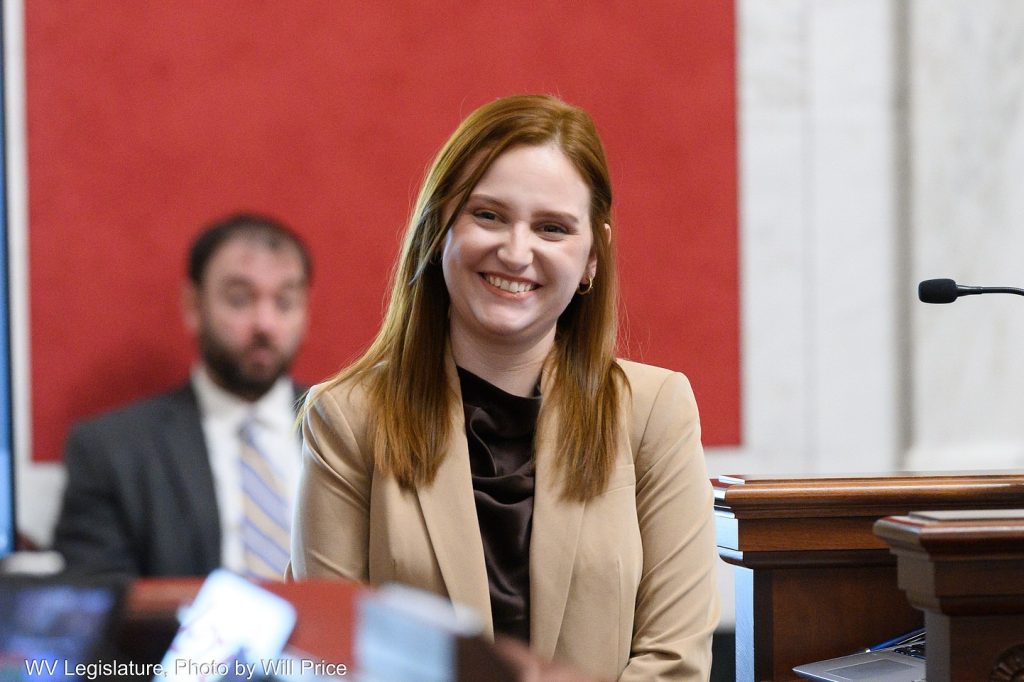
Jessica Dobrinsky, Chief of Staff for the Cardinal Institute, published a comprehensive analysis of the labor & delivery situation on her Substack titled Clear Lines following the legislative interim committee meeting.
She agreed with Woelfel’s line of questioning for Vandalia, writing, “New entrants cannot open without a contract with the incumbent they would compete with.”
Dobrinsky explained that while lawmakers removed birthing centers from the Certificate of Need state code in 2023, state rules still require new birthing centers to be contractually tied to existing hospitals. “State rules require a written hospital transfer agreement before the Office of Health Facilities Licensure and Certification will issue a license,” she said.
Further complicating the state’s efforts to expand maternal health care, Dobrinsky pointed out several instances of state code that could inhibit West Virginia’s ability to capitalize on the $17 million Aliff referenced.
Those instances include the state not licensing certified professional midwives and state Medicaid rules not allowing payment for home visits by doulas, midwives, or nurses after a mother gives birth in West Virginia.
Aliff’s practice may be sold soon
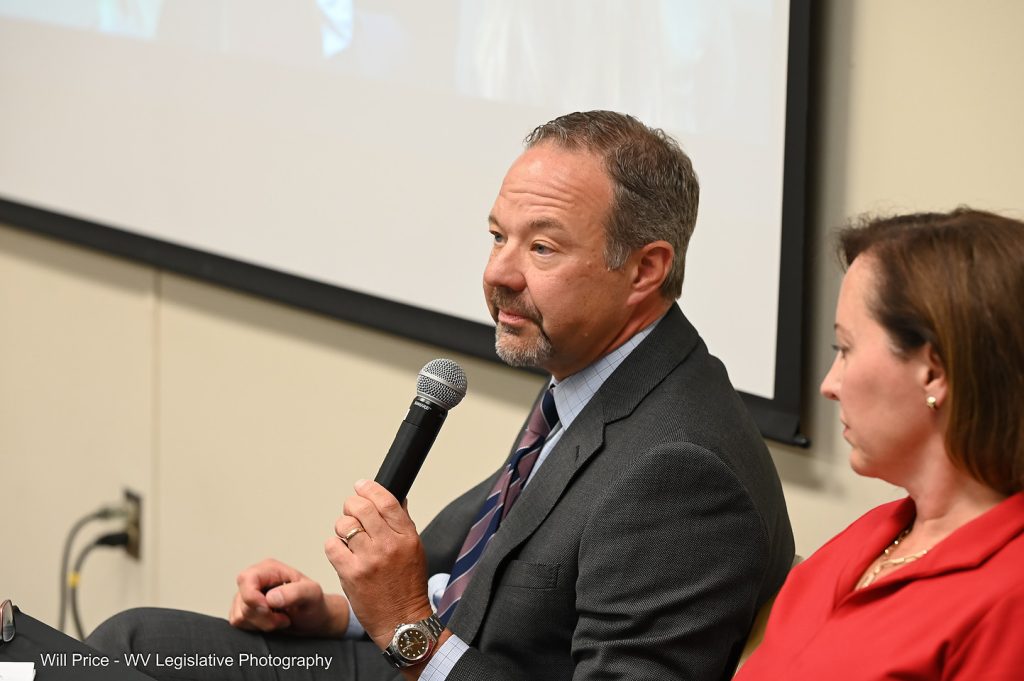
For Dr. Aliff, this isn’t just a theoretical matter. Her business and her career are at stake.
“We are currently looking at contracts right now to be acquired,” she told lawmakers at the end of the meeting. Her own private practice, which she has built for 20 years with her husband, is up for sale — not because she wants to sell it or needs to right now, but because she thinks that’s the only way it will survive once she retires.
“Reimbursements are going down. The cost of malpractice is going up,” she said. “We can’t find anybody who wants to run a private practice when we retire.”
Related Articles

West Virginia Herpetology Symposium brings enthusiasts, researchers together at New River Gorge
Headlamps pierce the dark on a trail that runs along the cliff faces of New River Gorge National Park and Preserve

BLACK BY GOD: Call to Action: PSC sets public meeting date to hear concerns regarding data center construction
The PSC (Public Service Commission) of West Virginia will hold a public hearing later this month regarding House Bill 2014 – otherwise known as the “Certified Microgrid Program” – a widely debated piece of legislation passed during the 2025 legislative session.
Dear Grace: Conversations that matter
I work full-time, but I can’t afford to live. Will the economy ever get better?