Carnegie Hall offers face jugs workshop
PRESS RELEASE
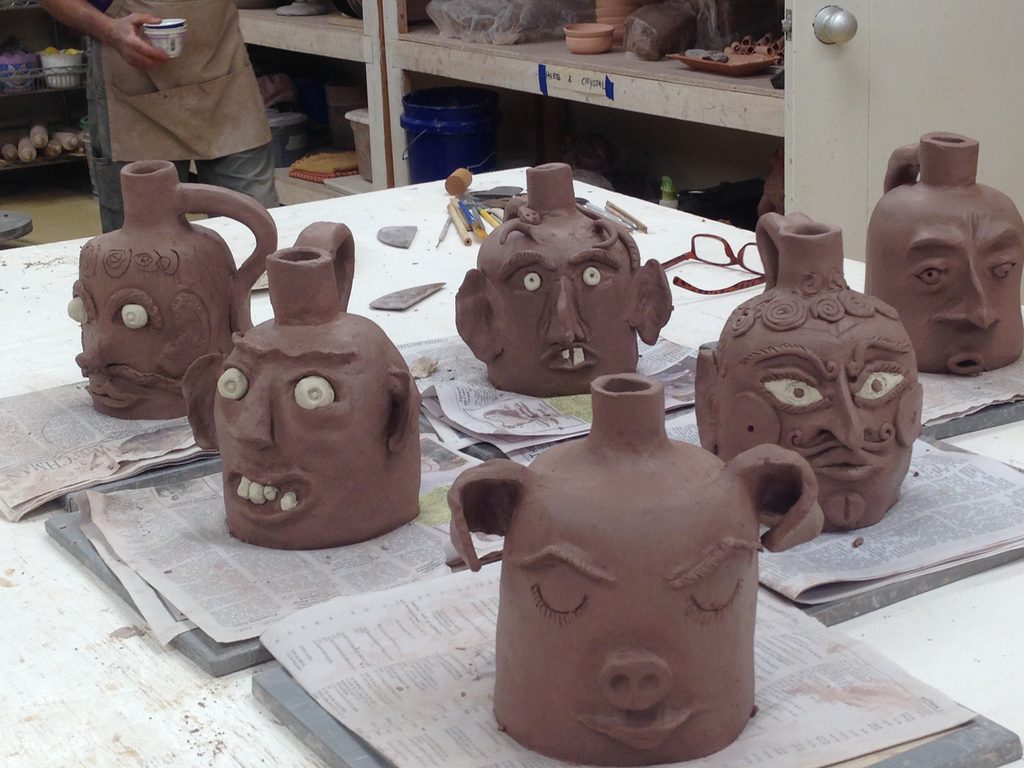
Lewisburg, West Virginia – Carnegie Hall invites artists, history enthusiasts, and curious makers to explore a unique American folk art tradition in Hand Built Ceramic Face Jugs, a hands-on workshop led by ceramic artist Sean O’Connell on Saturday, November 7, from 12 to 4 p.m. Participants will learn the traditional history and cultural significance of face jugs while creating their own whimsical and functional ceramic vessel using simple hand-building techniques.
This distinctive type of ceramic face vessel first appeared in the American South during the mid-1800s, created by enslaved African American potters who blended West and Central African spiritual traditions with local stoneware practices. Today, face jugs remain one of the most recognizable and intriguing forms of American folk pottery, celebrated for their expressive character, individuality, and rich cultural heritage.
During the workshop, students will shape and sculpt their own one-of-a-kind face jug while learning about the history, symbolism, and traditional uses of these remarkable vessels. Whether displayed as artwork or filled with cider, maple syrup, or another favorite refreshment, each finished piece will connect participants to a centuries-old craft tradition. Following the workshop, Carnegie Hall will glaze and fire the completed jugs, preparing them for pickup at a later date.
The workshop is open to participants ages 14 and older and is limited to eight students. Tuition is $75 for members and $95 for nonmembers. Scholarships are available, with adults age 50 and older paying only $50.
Hand Built Ceramic Face Jugs is part of Carnegie Hall’s ongoing commitment to preserving traditional arts while providing engaging, hands-on creative experiences for the community. Space is limited, and early registration is encouraged.
To register or learn more, visit carnegiehallwv.org or call (304) 645-7917.
Carnegie Hall programs are presented with financial assistance through a grant from the West Virginia Department of Tourism and the National Endowment for the Arts, with approval from the West Virginia Commission on the Arts.
Author