A tech war between America & China comes to a small town in West Virginia
By Stephen Baldwin, RealWV
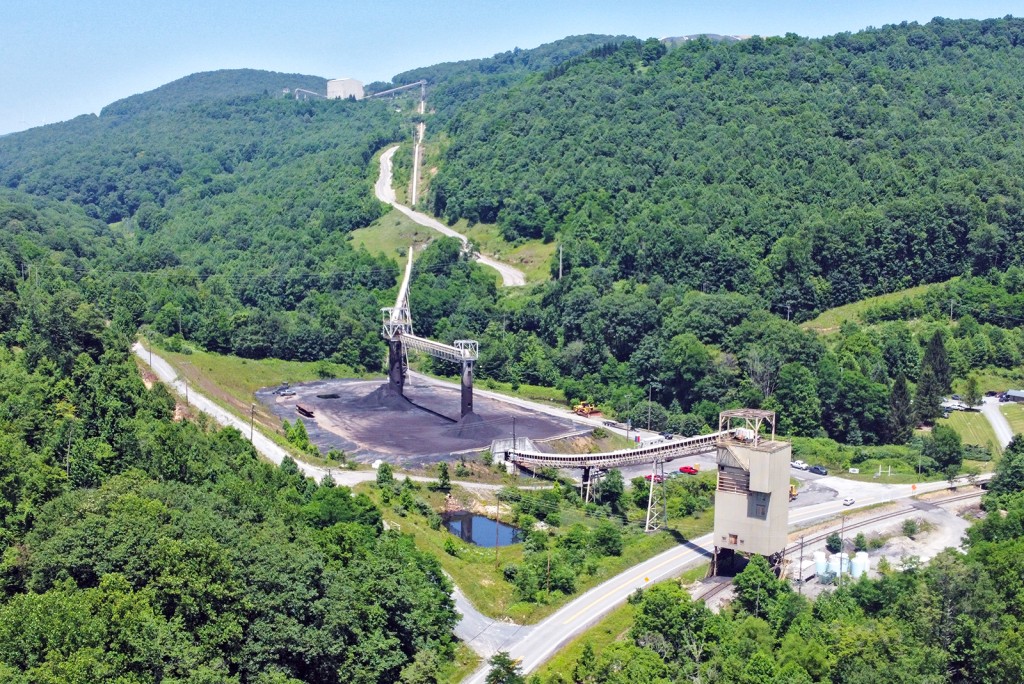
RUPERT, W.Va. – Rupert is a small town in western Greenbrier County with a population of 877 people. There are no traffic lights. Locals love Possum Holler Pizza, a restaurant that has survived several floods in a region prone to high water. Folks in the town value relationships, faith, and the land their families have cared for over many generations.
Now, Rupert may also be the epicenter of a budding American strategy to outmaneuver China in developing rare earth elements used in the tech industry.
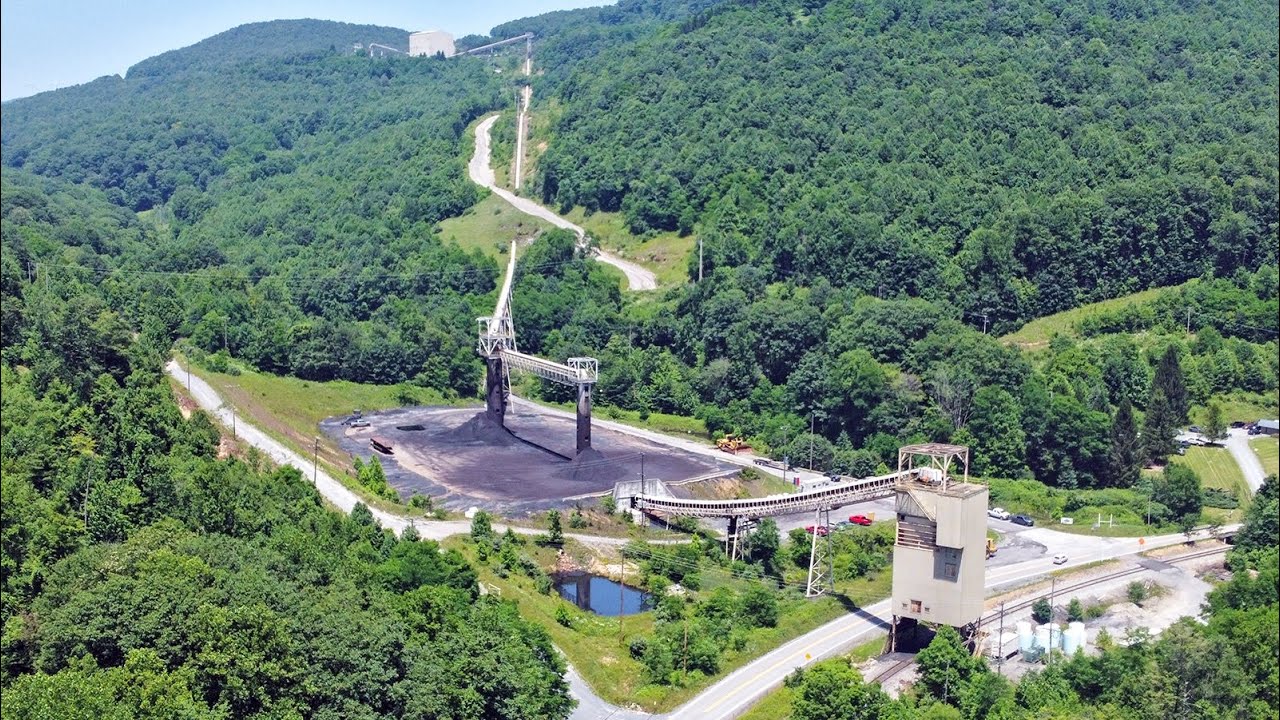
On July 1, 2026, a trio of businesses announced plans to build a $150 million rare earth element processing facility in Rupert. They say it will be co-located on the property of Greenbrier Smokeless Coal, a coal company that changed hands in 2025 and had been idle until recently.
“The country needs it,” said Steve Ragiel, an engineer by trade who is now president of Flash Metals USA, one of the partners who has developed an industrial process for purifying rare earth elements. “It’s gonna happen somewhere. Greenbrier makes the most sense.”
The global battle for rare earths
China currently controls more than 70 percent of the world market for rare earths, which power everything from cell phones to electric vehicles to missiles and catalytic converters. Federal officials want to begin using rare earths processed on American soil for defense and industrial uses.
“This is a real nexus of technological advancement and industrial common sense,” said Drew Horn, a businessman who describes himself as a “conduit” between the government and private industry in rare earth development.
Horn served as critical minerals czar during the first Trump administration, before he went into the private sector.
“I started a private firm focused on finding these solutions domestically in 2021,” Horn said. “We’ve been pursuing projects backed by the Department of War, private equity, the Department of Commerce, and more, so that we are less reliant on Chinese materials.”
How did Rupert get involved?
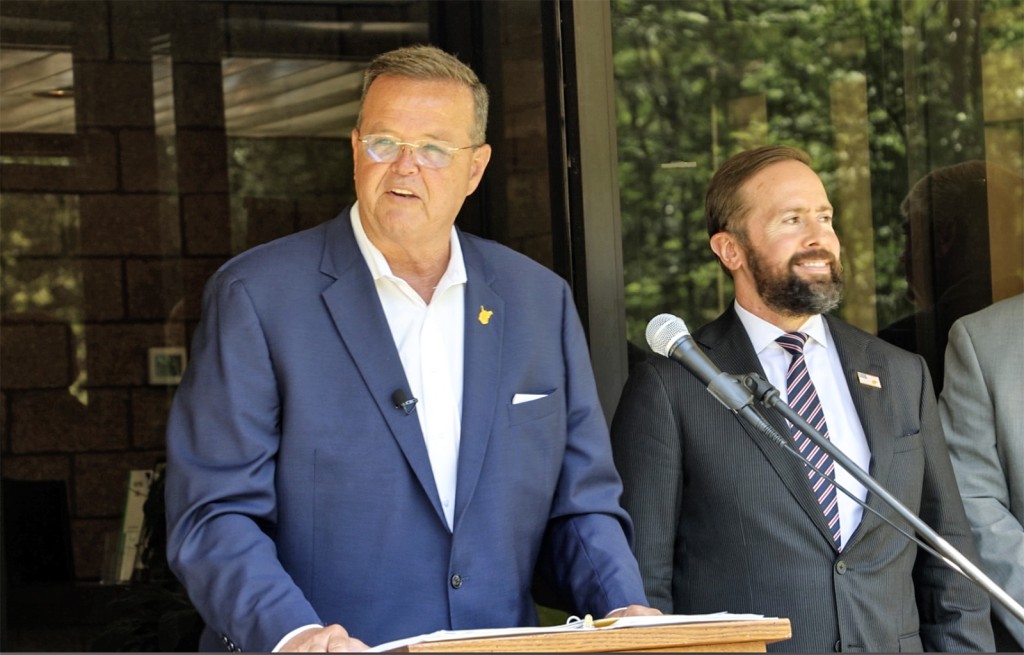
Horn said he now resides in West Virginia, and the state’s Secretary of State, Kris Warner, introduced him to a coal operator named Amanda Hale, who purchased a mine in Greenbrier County.
Hale and a group of investors purchased Greenbrier Smokeless on Jan. 13, 2025. A lawyer by trade, Hale’s father had worked in the Rupert mine years ago, before it was sold to Coronado.
“He came home and cried that day,” Hale said “I feel like God has me here for a purpose. We are a family. We want to see Rupert prosper and grow.”
Within five months, Hale and her team had reopened two of the facility’s mines and brought people back to work. But she said the coal business is fickle.
“The market has been slow. Having this (the rare earth project) basically hedges our operations and provides security to our complex.”
Greenbrier Smokeless is believed to have one of the largest reserves of metallurgical coal on the East Coast.
“I was genuinely impressed across the board with the advancement Amanda and her team had made,” Horn said. “She said they had rare earth in the tailings and the coal.”
(Coal tailings are the waste products left behind after coal has been extracted from the earth. Usually, around 20 percent of the material that is mined becomes tailings. Researchers from West Virginia University pioneered a method to extract rare earth elements from coal, tailings, and coal waste products over the last few years. For more info on the WVU project, click here.)
Those results convinced Horn and Ragiel that it was possible to purify rare earths domestically, providing a critical bypass to lessen reliance on Chinese providers.
“This was all a distant dream 10 years ago,” Horn said. “Now, I want to see West Virginia with the biggest processing hub in the U.S. for all of these materials.”
“What we want to do is bring in material from all over West Virginia, the U.S. and the world.”
Horn doesn’t hold back; he has big plans. And he’s confident he can bring them to fruition.
How will it all work?
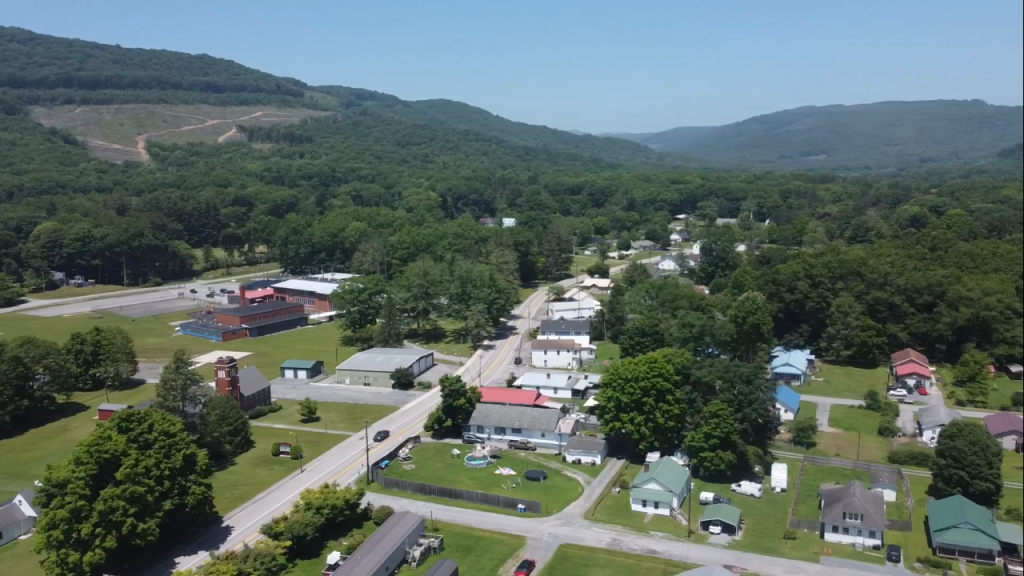
Since the announced $150 million project was announced, locals have been curious about what it will mean for Rupert. What exactly are they building? When will it be finished? Who will be hired to run it? How will it all work?
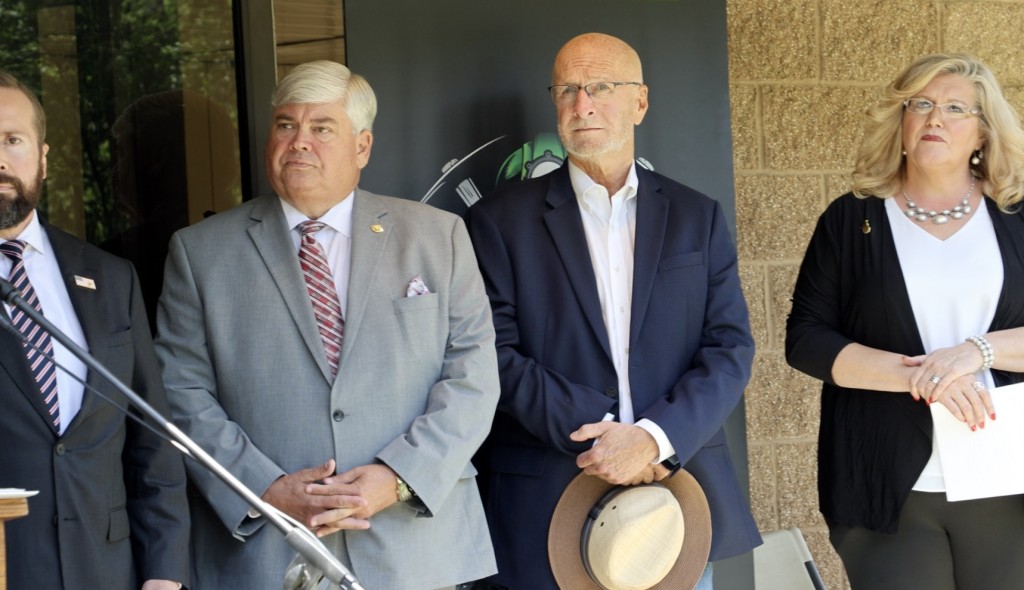
Hale, Horn, and Ragiel sat down with RealWV for an in-depth interview to address those questions.
“We call it a mini smelter,” Ragiel said of the project. “The initial buildings are about 200,000 square feet. It’s on about 6-7 acres. Then Amanda and her team have laid out an expansion pathway if we need additional acreage and buildings.”
To put that size in perspective, 200,000 square feet is more than 3 1/2 football fields.
Horn has developed memorandums of understanding, or MOUs, with partners in Greenland, Cameroon, Canada, Brazil, Argentina, Chad, and more.
Those partners will send “a concentrate made from rare earths coming out of the ground,” Ragiel said. “We bring that in (to the mini smelter in Rupert) and purify it into a form that can be used in electronics.”
The concentrate will come to Rupert via train and truck.
“Our plan is to bring it in via totes or what are called super sacks,” Ragiel said. “Then we offload it and process it.”
Once the concentrate containing rare earths has been purified in Rupert, it’s in powder form. That powder is then shipped out by train and truck to buyers.
“We can sell directly to the Pentagon, the Vault, a national stockpile of rare earths financed by private capital, automotive companies, and aircraft companies to give the U.S. a cheaper and better solution.”
Ragiel said it will take approximately two years to build the facility and prepare it for operation.
Environmental impact?
Without yet being asked about it, Hale, Ragiel, and Horn were all quick to speak about the potential environmental impact of the rare earth processing facility.
“Greenbrier has always been recognized for environmental integrity,” Hale said. “We have two native spawning trout streams nearby, and we are very conscientious.”
“China destroys the environment and the people doing the work,” Horn said, referencing the means by which they purify the rare earths. “They have no oversight. That’s why they own the market for this. We’re processing a cleaner, faster, regulated version that protects the environment using better technology.”
“The old way,” Ragiel said, “is very dirty…a lot of acids and cooking and reagents that are hard to deal with. We use a lot less acid. We use little to no acid, and it’s highly controlled.”
Ragiel said the process he uses at Flash Metals is a “clean tech.”
“We’re using electricity to heat up the concentrate and turn them into chlorides,” Ragiel said.
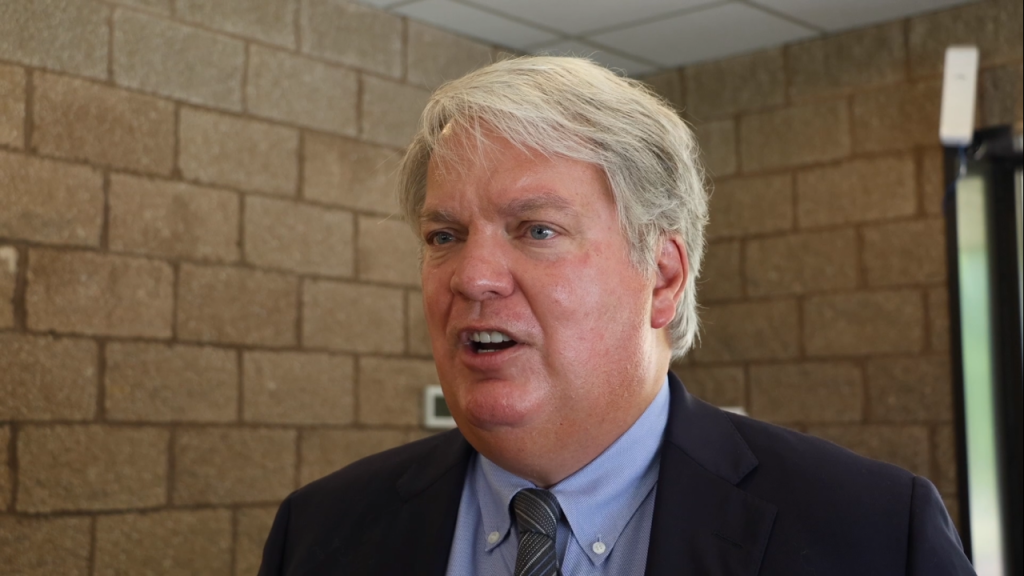
Asked at the announcement whether the project had the necessary permits with the state Department of Environmental Protection, or DEP, Ragiel told RealWV’s Jenny Harnish, “Most of the permits are part and parcel with the site. There’s gonna be a couple supplemental ones.”
RealWV reached out to the DEP to inquire about needed permits. Terry Fletcher responded that no permits had been requested yet.
During a later interview, Ragiel noted that he does not expect many special permits to be needed.
“There may be a special chlorine permit needed,” Ragiel said. “We use a chlorine container, a double-wall container that holds the chlorine canisters. That’s very standard.”
Matt Ford, a candidate for county commission who also runs Greenbrier Environmental Group, spoke to the issue of permitting in a recent interview with RealWV, saying, “I assume the project will require several permits. Storage of any chemical requires proper storage design and spill planning. I am interested in knowing how much will be stored and how it will be managed. Regulations have many requirements for chemical storage, planning, and inspections.”
Local residents are hopeful and skeptical
In the wake of the announcement, RealWV reached out to nearly a dozen local residents to gauge their feelings about the project. None agreed to speak on the record, fearing their support or opposition would be divisive in the small community.
Most residents generally spoke about being simultaneously hopeful and skeptical of the project. So RealWV asked Hale, Ragiel, and Horn to respond to that sentiment.
“I understand it,” Hale said. “I come from Southwest Virginia. When the mines were good, you could see it in the community. And when they weren’t, you could see it. As long as there’s breath in me, I’m gonna fight to move the Greenbrier complex forward. My dad helped Joe Turley build this. We’re not gonna stop.”
“I understand the skepticism,” Horn said. “This is a new area of industrial growth. But it’s backed by President Trump. He has deployed billions in financing and funding to bring these projects to fruition. We plan to be fully transparent. We have the backing of large institutions, private equity, and the highest levels of government. That’s enough to indicate this is real and will stand up to any scrutiny.”
Ragiel put it more practically: “The U.S. needs a purification center. Greenbrier makes the most sense.”
He also pledged that most of the jobs they create will go to local workers, whom Flash Metals will train. He said only a few highly trained employees may be brought in from the outside.
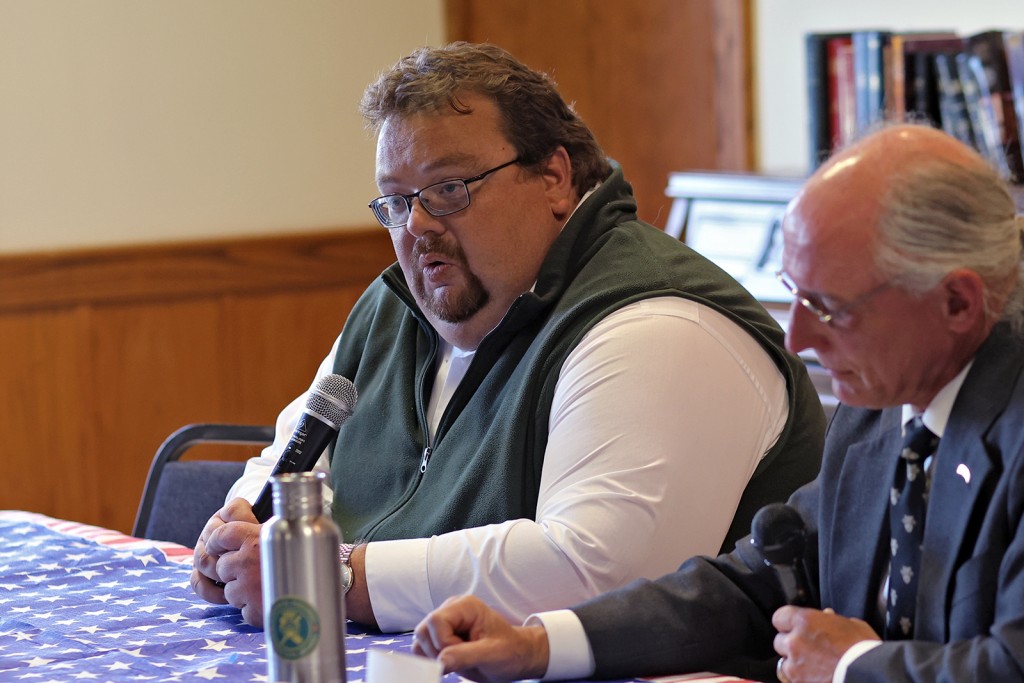
Matt Ford, who lives in western Greenbrier County, thinks some of the skepticism comes from past development projects that didn’t pan out as intended.
“Aside from the closure of the Meadow River Lumber Company and the completion of I-64 bypassing traffic from Route 60, the WV Co-Generation Project was the biggest community disappointment in western Greenbrier County. That disappointment and ongoing skepticism have impacted all future efforts to improve the area.”
He hopes the developers and the community have learned positive lessons about how to work together more effectively in the future. “I encourage the project team to work with local leadership to ensure that the project has the most benefit it can have to the region. We have a lot of resources in Greenbrier County that can collaborate to help make this project successful.”
Rupert isn’t alone. Other communities across the nation are seeing huge investments from the private sector and federal government in hopes of winning the rare earth wars.
Last week, the US military announced plans to build their own rare earth refinement facility in Utah.
Just a few days ago, west coast mines sold their reserves to Chinese interests.
China is also imposing import fees on any products backed by rare earths from the US.
And a $1.2 billion rare earth processing facility is being developed in South Carolina.
‘God has his hands on this’
So the war between the U.S. and China is very real. Whether small towns like Rupert can benefit from that remains to be seen.
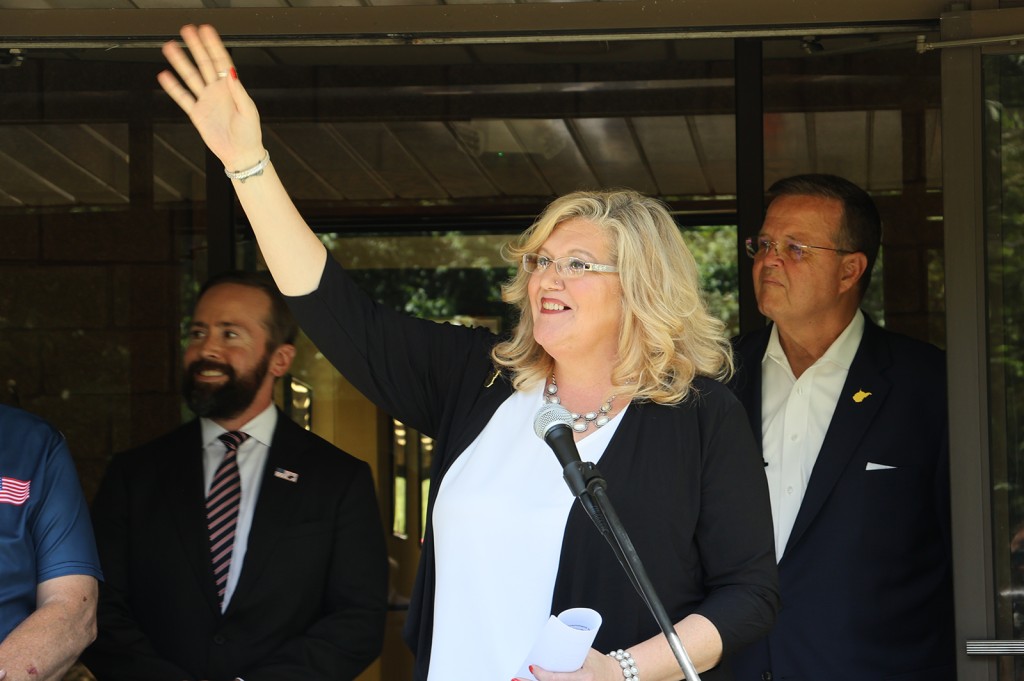
But if you ask Amanda Hale, she will tell you confidently that things are going to work out for good.
“God has His hands on this.”
Related Articles
Real West Virginian of the Week: Ashley Alford Glance helps shape the future of Putnam County
This story is part of RealWV’s year-long focus on youth and belonging in West Virginia, exploring the difficult decisions young people face when deciding whether to stay or leave.